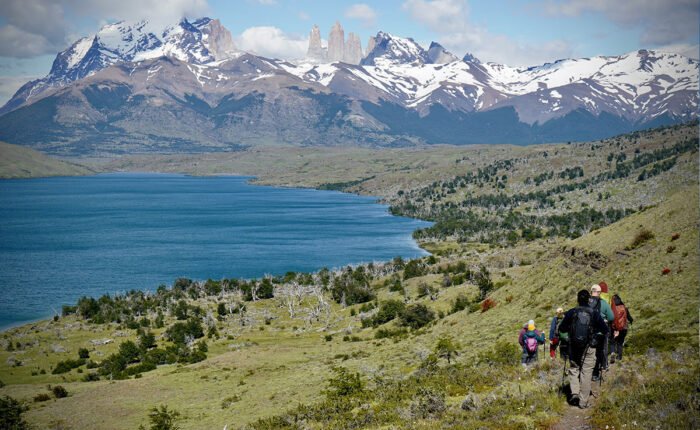



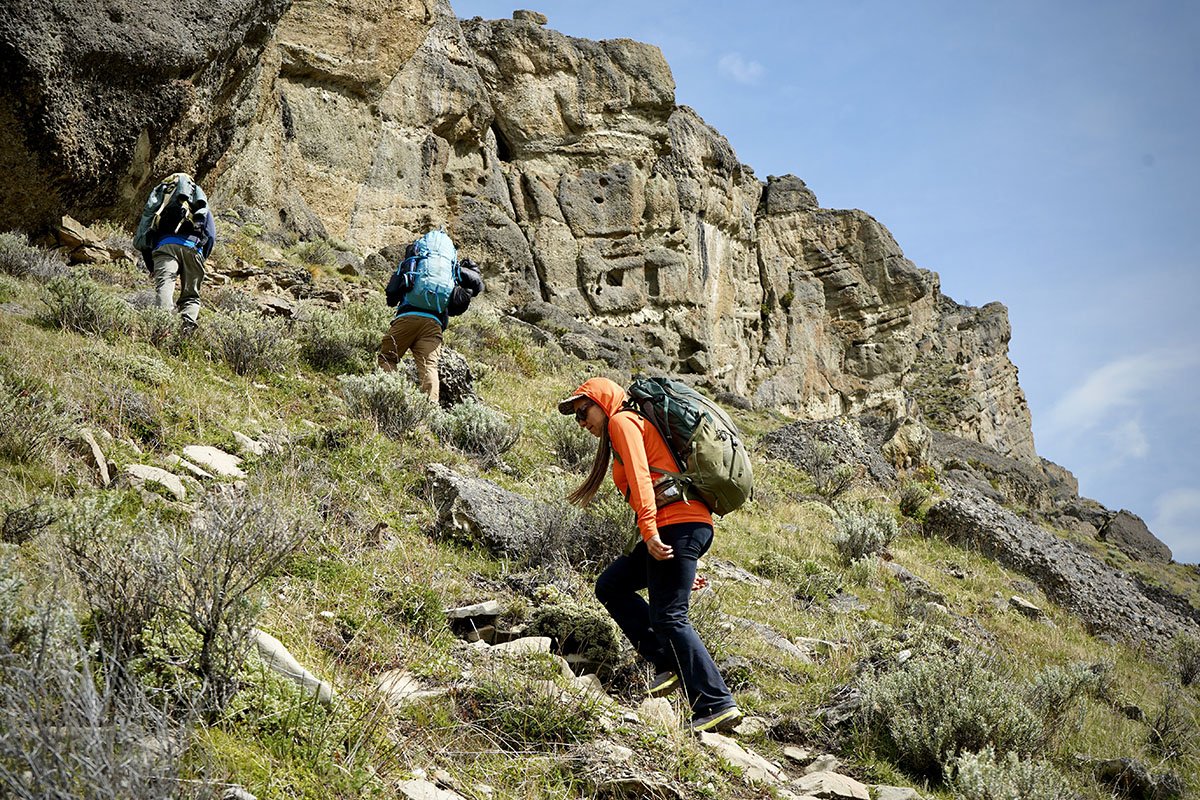
Patagonia is known for offering all four seasons in a single day. Because of that, being properly prepared isn’t optional; it’s essential.
Your experience here will largely depend on how ready you are to handle changing weather conditions. For comfort and safety, having the right clothing and equipment makes all the difference.
Here’s what I recommend carrying in your daypack during any outdoor activity in Patagonia:
- High-cut waterproof hiking boots (Gore-Tex recommended). Terrain in Patagonia is often rocky, uneven, and occasionally wet. With rain and stream crossings along many trails, proper footwear is non-negotiable.
- Buff or neck gaiter. Protecting your ears and neck is crucial in strong winds. A buff is incredibly versatile, and it also helps keep your hat from flying away.
- Sunglasses with UV protection and side coverage. The wind here can be intense. Choose sunglasses with good coverage and consider a strap to secure them. Protect your gear — and help keep the park clean.
- Cap or beanie, plus gloves. Avoid wide hiking hats that cover the entire face — they’re uncomfortable in strong winds. Opt for something secure and practical.
- 1-liter reusable water bottle. On the main trails of the W Trek and the Paine Circuit, you’ll find fresh streams approximately every hour. Carry a refillable bottle and avoid single-use plastics.
- Waterproof jacket and pants (Gore-Tex or similar). Weather can shift quickly. A reliable waterproof outer layer is essential.
- Insulated jacket (down or synthetic). You may not need it while actively hiking, but it becomes indispensable during breaks, windy viewpoints, or lower-intensity days.
- Personal first aid kit. Always travel with your necessary medications. For longer hikes, include blister treatment, electrolytes, insect repellent, and basic pain relief.
- Breathable layered clothing. Think in layers: base layer, mid-layer, outer shell. You may not use every layer every day, but you’ll be grateful for them on colder or windier days.
- Trekking poles. In Patagonia’s wind and uneven terrain, trekking poles provide additional stability and reduce strain on your knees, especially on descents.
- Sunscreen. The ozone layer is thinner in southern Patagonia, making UV exposure stronger than many visitors expect. Daily protection is essential.